Next Stop: Pathology
Medical school functions like a high-speed, 4-year commuter train with rigid, mandatory stops (exams/rotations) and little room for unscheduled delays. One stop that is lacking is the pathology station.
Long-time CAP Member, Dr. Ronald Spark, recognized this gap and shared his interest with the CAP Foundation in getting more medical students involved in pathology. While the establishment of pathology special interest groups (SIGs) is a vital track for engagement, he knew that medical students as conductors were the best resource to inspire more of their colleagues to hop on the train to pathology.
Debuting in 2023, the Sparking Interest in Pathology Award supports projects and initiatives that introduce, educate, and inspire medical students to pursue a career in pathology.
This pilot supported four projects, resulting in the establishment of three medical student-led pathology interest groups and the development and release of an interactive pathology workshop series.
Each project has opened the window into the world of pathology for medical students and increased institutional awareness of the field and its opportunities.
Emily M. Hartsell
The University of South Alabama College of Medicine
Mobile, AL
Pathology Interest Group.
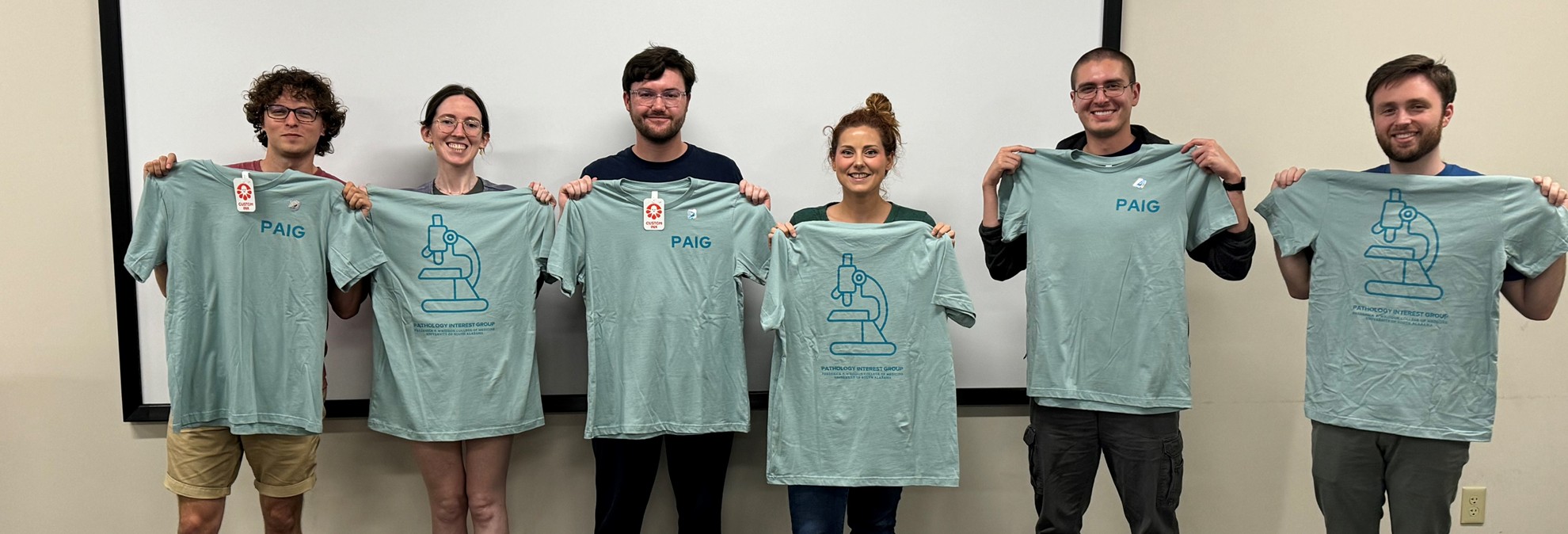
Developed the South Alabama College of Medicine’s Pathology Interest Group (PAIG) to introduce and educate fellow medical students on the specialty of pathology.
This PAIG bullet train did more than offer a pathology station; it increased engagement with year one medical students, matched medical students with faculty research mentors, hosted content review via Zoom for students before heavy histology exams, and can be credited with seven PAIG members successfully matching into pathology at U Miami/Jackson Health, University of Maryland, Emory, BIDMC, and Duke.
Justin Liu
Northwestern University Feinberg School of Medicine
Chicago, IL
Pathology Interest Group
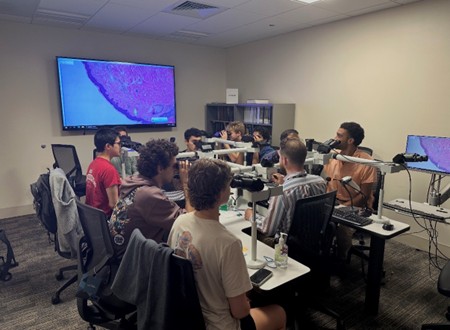
A local stop in Chicago received award funding supporting a medical student in establishing and leading the Northwestern University Feinberg School of Medicine’s Pathology Interest Group. Multiple events were held throughout the year, enticing medical students by offering food and the added attraction of learning more about pathology by participating in multi-headed scope sessions.
Darby Naheedy, MLS(ASCP)cm
Midwestern University Chicago College of Osteopathic Medicine
Downers Grove, IL
Pathology Interest Group
Moving down the same track, the next stop was Downers Grove, with the establishment of a Pathology Interest Group at Midwestern University Chicago College of Osteopathic Medicine. Not only was this medical student successful in establishing the Pathology and Precision Medicine Club, but she also worked diligently to draft new bylaws to reflect the club’s expanded mission. Darby’s effort resulted in an 11-page document along with the creation of a logo to further cement the Pathology Interest Group’s identity.
Sarah Danielle Galloway
California University of Science and Medicine
Colton, CA
Pathology Simulation Workshops
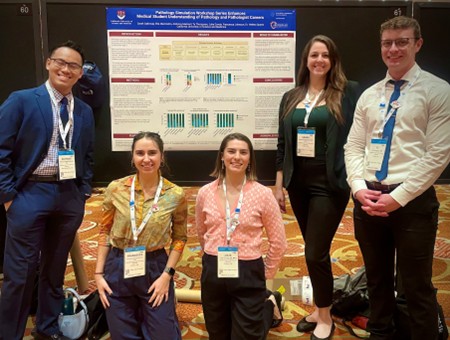
To further support future pathologists, Sarah and her team launched a series of immersive pathology simulation workshops designed to strengthen medical student understanding of pathology, reinforce USMLE Step 1 content, and increase confidence in considering pathology as a career.
The student-led, repeatable workshop series used interactive scenarios to simulate the role of a pathologist and aligned each session with the corresponding organ system block in the medical school curriculum. The project was featured at the CAP24 poster session and earned the “Best Medical Education Poster Presentation Award” at the CUSM/ARMC 6th Annual Research and Scholarly Activities Symposium. A manuscript detailing the program’s impact and implementation guide has also been accepted for publication in Archives of Pathology & Laboratory Medicine.
“Despite pathology’s central role in patient care, many medical students receive little to no structured exposure to the specialty during their training. By bridging the gap between classroom learning and real-world clinical applications in early medical education, the Pathology Simulation Workshop Series ignites curiosity and empowers students to make informed choices about pursuing pathology experiences, fostering well-rounded career decisions.” — Sarah Galloway
There was no slowing the pathology spark train of innovation in 2025 with the continuation of awarding five new projects that continued to showcase students’ creativity and desire to unite their classmates with the world of pathology.
Jenna Aungst
Lincoln Memorial University-DeBusk College of Osteopathic Medicine
Knoxville, TN
Pathology E-Learning Modules with Question Bank
A never-before-seen Spark topic, involves the creation of free, open-access e-learning modules with a forensic and autopsy focus. The educational content is hosted on a custom-built website integrated with a learning management system and question bank plugin. Not only is it designed to support learners at various stages of their training and increase access to pathology in rural and underserved areas, but it also exposes medical students to a rarer niche of pathology often not seen (if at all) until very late into residency.
Six educational modules have currently been developed for the website, forensicpathologyeducation.org. These include learning objectives, practice questions, and a host of reference materials for further reading and review.
Nicholas Barron
Michigan State University College of Osteopathic Medicine( MSUCOM)
East Lansing, MI
Student-Led Pathology Elective Expands Early Exposure and Strengthens Specialty Interest at an Osteopathic Medical School
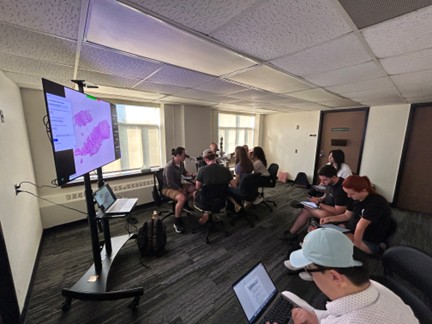
This interactive pathology elective combined in-person microscopy with live Zoom participation, giving students flexible access to diagnostic pathology. Over six months, the elective hosted eight sessions featuring microscope-based sign-outs and a mock grossing lab.
Students first reviewed curated cases independently or in pairs before joining a faculty pathologist for a live sign-out session streamed to both in-person and virtual learners. Participants praised the opportunity to observe real-time diagnostic reasoning, with one student noting it “really helps you appreciate the thought process of a pathologist.”
The project highlighted the impact of a student-led, faculty-mentored model in expanding early exposure to pathology, particularly in settings where opportunities may be limited. Moving forward, the team plans to enhance virtual engagement with more interactive features for Zoom participants
Lauren Belanger
University of Minnesota
Minneapolis, MN
Find Your Path
Finding your path to pathology may involve some track changes and switchbacks, reinforcing the importance of hosting events for medical students to learn about pathology as a career, including how pathology relates to other specialties.
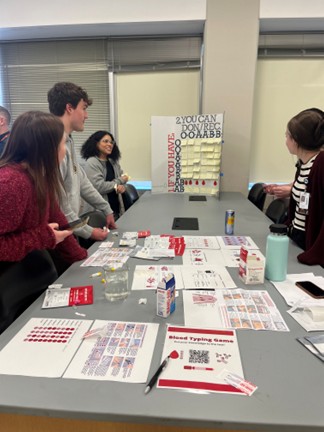
Lauren, worked with pathology residents, pathology faculty, and pathology assistants, organizing two events that attracted over 50 medical students. Multiple stations with hands-on sessions allowed students to become more familiar with pathology as a specialty and how it relates to medicine as a whole. Hands-on stations included grossing/histology, blood typing, FNA simulation, and trivia. Students engaged at their own pace learning how fun and rewarding pathology can be.
Charles Herndon and Alex Chen
Touro University Nevada COM and Perelman SOM at the Hospital of the University of Pennsylvania
Philadelphia, PA
A Digital Flashcard System for Pathology Case Challenges
As the pathology train keeps chugging along from coast to coast, a stop in Philly became tall order. Knowing that everyone processes information uniquely based on personal, cognitive, and sensory preferences—such as visual, auditory, or kinesthetic (hands-on) styles. This project focused on creating a digital flashcard system for pathology case challenges by developing a robust Anki deck, that now contains over 5,000 cards. The deck compiles educational content from a wide array of high-quality online pathology resources, translating pathology cases from various sources into a format optimized for modern study habits and easy access.
To demonstrate the project’s success and provide a guide for users, Charlie and Alex developed a video walkthrough showcasing the flashcard system in action.
Christina Quynh Vu
ATSU Kirksville College of Medicine
Kirksville, MO
Bringing Pathology to Life for Young Learners
Expanding the Spark train to include even young learners through STEM, for Christina’s Mini Medical School project, she enlisted over 10 ATSU student groups to lead fun, age-appropriate, interactive science stations using everyday items that kids are familiar with and tailored activities to reflect each volunteer’s medical discipline.
Pathology-focused stations allowed students to prepare their own slides and use beginner-friendly microscopes. Kids built blood models using slime, red beads, foam balls, and glitter to represent their various components. Another station taught students about cells using rice cakes topped with fruit and candy to illustrate organelles. These simple items were relatable to young learners, ensuring that the content was impactful and knowledge was easily retained.
What makes this project especially meaningful is its sustainability. The curriculum is flexible and reusable, the event fostered strong collaboration across campus, and is easily recreated with a range of budgets in a variety of settings.
The pathology train wheels keep rolling along to new stations throughout the US. Passing through the tunnel from 2025 to 2026 has brought three new projects to date, led by medical students, all focusing on connecting students to opportunities and innovation to access.
Carlyn Atman, MA
Cooper Medical School at Rowan University
Camden, NJ
Mütter Museum – pathology-focused tour bringing together medical students attending Cooper Medical School at Rowan University (CMSRU) and Rowan Virtua School of Osteopathic Medicine (RVSOM).
Tanner Hoole
Louisiana State University Health Science Center
New Orleans, LA
Expanding hands-on opportunities for medical students to learn about pathology by offering introductory grossing and FNA demonstrations.
George Huang
Dell Medical School at the University of Texas at Austin
Austin, TX
Hosting workshops that teach medical students foundational skills in grossing and sectioning tissue based on pathologic findings discovered in the anatomy lab.
It’s not tooting your own horn when your hard work and creative efforts so positively impact your field of study. Hats off to these busy medical student conductors who are tirelessly working to keep the pathology training railway moving forward.
More Stories


Why Donate
Every person deserves a diagnosis. Support care beyond the microscope. Expand access to pathology-locally and globally.