
From Slide to Society: Bringing Medical Ethics into Pathology Practice
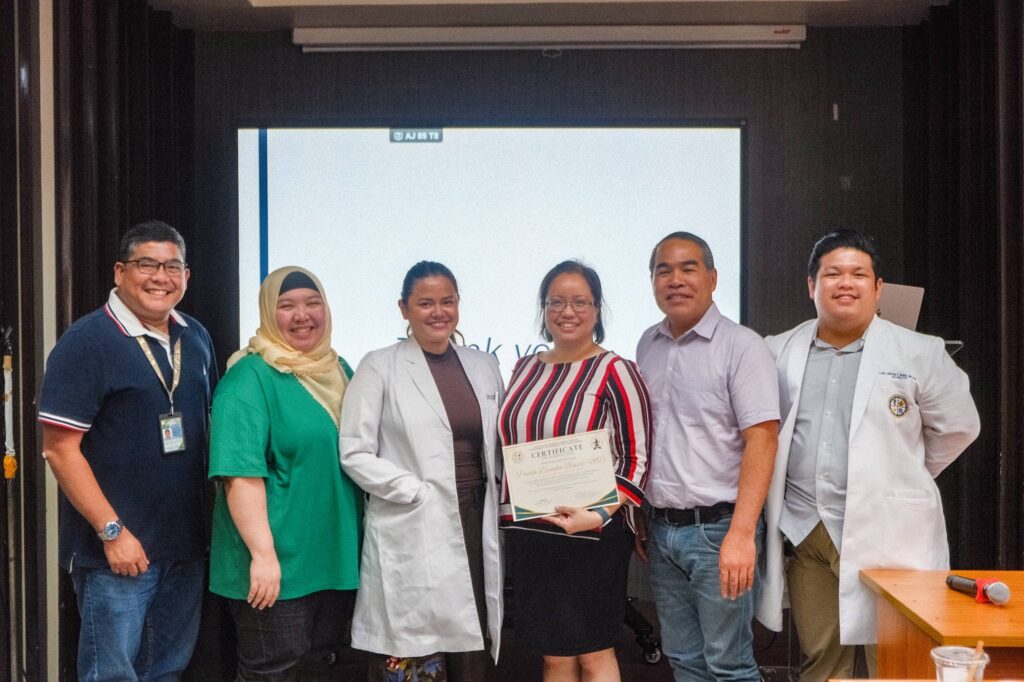
The 2025 CAP Foundation Keitges Grant for Medical Ethics supported Paula Danika A. Binsol, MD, in bringing together pathology professionals and trainees in Manila, Philippines, to explore the role of ethics in laboratory medicine. Read her experience and the impact of creating meaningful conversations across borders.
When I first imagined this project, I knew the most exciting part would also be the most challenging: bringing it to life in Manila, Philippines, half a world away from my home institution in Temple, Texas. The distance made the work feel ambitious from the beginning, but it also reminded me why the project mattered. I wanted to create a space where pathology professionals, trainees, and students could talk openly about medical ethics—not as an abstract concept, but as something that shapes real decisions in laboratories, hospitals, and communities every day.
My host institution, Jose R. Reyes Memorial Medical Center (JRRMMC), is a tertiary government hospital in the Philippines that serves the people of Metro Manila in the National Capital Region. As a major center for diagnostics and specialized care, JRRMMC is deeply committed to caring for indigent patients, individuals with limited access to health services, and those in the city who need care the most. That setting gave the project a powerful sense of purpose. Ethics in pathology can sometimes seem distant from direct patient care, but at JRRMMC, the connection between laboratory decisions and patient lives was immediate and unmistakable.
During the month of May, my goal was to host a workshop and seminar focused on the practical applications of medical ethics in pathology and laboratory medicine. Together, we decided the event should reach beyond one department. We opened it to pathology residents throughout the National Capital Region, as well as laboratory interns, medical technologists, medical laboratory scientists, fourth-year medical students rotating at the hospital, and others with a special interest in bioethics and pathology.
The challenges began long before the event itself. After receiving the grant, I was still in the United States while trying to coordinate with colleagues in Manila. Communication was not always easy. Limited infrastructure, inconsistent internet and electricity, and international time differences made planning slow and unpredictable. Because JRRMMC is a government institution, there were also administrative processes to navigate. Many local vendors and suppliers operated primarily through cash-based, in-person systems, with little to no online presence. Tasks that might have been simple at home required patience, flexibility, and help from partners on the ground.
When the logistics felt most complicated, I started with the piece I knew would anchor the event: finding the right speaker. I had initially hoped to invite at least two experts in bioethics, but scheduling conflicts and limited availability, especially because May coincided with finals month for medical schools in the capital, made that difficult. I adjusted the plan and focused on securing one strong speaker who could help carry the day.
Dr. Roland Pangilinan, Chair of Medical Ethics at the University of Santo Tomas Faculty of Medicine and Surgery, graciously agreed to participate. His expertise in medical ethics and bioethics made him an ideal partner for the program. He began with a didactic introduction to medical ethics, then moved into the application of ethical principles within pathology. Importantly, he connected the College of American Pathologists Principles of Ethics to the Philippine setting, helping participants consider how professional standards can be interpreted and applied in a different health care environment.
After the lectures and a short break, we moved into a workshop built around three ethical dilemmas specific to pathology and the Philippine laboratory setting. This became one of the most meaningful parts of the project. Pathology attendings and residents contributed real-life experiences, challenges, and resolutions, turning the session into an active conversation rather than a one-way lecture. The room became a place where people could examine difficult questions together and recognize that ethical practice is not separate from daily laboratory work—it is part of it.
Before the seminar began, I asked attendees to complete a pre-survey about their current understanding of ethics in pathology. One of the most surprising findings was that many participants initially believed there was little or no relationship between pathology and medical ethics. Informal conversations during breaks and meals reinforced that impression. Several attendees were surprised that a specialty often perceived as non-patient-facing could involve so many ethical decisions.
As the discussion developed, the influence of the environment became especially clear. In a resource-limited setting, ethical dilemmas can become sharper and more complex. For example, if current standards suggest targeted therapy for a specific diagnosis, but genetic testing is unavailable in the country, unaffordable for the patient’s family, or unlikely to lead to accessible treatment, what should the pathologist recommend? Should those options still be presented? Should pathologists advocate for testing that may create financial burden without a realistic path to treatment?
These questions became even more layered when we considered cultural context. In the Philippines, physicians are widely respected, and patients often place deep trust in medical recommendations. Many patients served by public hospitals are underserved, financially vulnerable, and may have limited formal education. That reality raised difficult questions about responsibility, advocacy, and communication. As pathologists, how do we balance the ideal standard of care with the lived reality of patients and families who may face debt, hardship, or impossible choices? The conversations were honest, thoughtful, and at times uncomfortable, but they were also exactly the kind of conversations I hoped the grant would make possible.
By the end of the event, we had achieved the central goal of the project: to create an inclusive forum where pathologists, pathology residents, medical students, medical technologists, interns, and ancillary staff could explore medical ethics in a practical and locally relevant way. We were able to assess current ethical beliefs, identify areas for growth, and begin building a shared language around ethical decision-making in pathology. I also had the opportunity to serve as a speaker, closing the event with a presentation on opportunities for pathology practice abroad, CAP Foundation projects currently underway, and pathways for further training and education outside the Philippines.
Looking ahead, my goal at the 12-month mark is to reconnect with the current residents of the JRRMMC Department of Pathology through a video call. I hope to learn whether their views on ethical practice have changed, how they have incorporated lessons from the workshop and seminar, and what questions remain most relevant in their daily work. For me, the success of this project will not be measured only by the event itself, but by whether it continues to encourage reflection, dialogue, and ethical awareness long after the seminar day has ended.
Just like Dr. Binsol’s journey from Texas to the Philippines, your idea can spark meaningful change. Keitges Grant for Medical Ethics applications open October 1.
More Stories



Why Donate
Every person deserves a diagnosis. Support care beyond the microscope. Expand access to pathology-locally and globally.