From Curiosity to Innovation: How CAP Foundation Donors Are Shaping the Future of Pathology
Every year, CAP Foundation donors help open doors for pathology trainees who are eager to learn, lead, and innovate. For recipients of the CAP Foundation Informatics Travel Award, that support provides much more than a trip to the CAP Annual Meeting. It creates opportunities that can influence an entire career. Through mentorship, education, networking, and exposure to emerging technologies, these residents gain experiences that help them become the future leaders who will advance patient care through pathology informatics.
Every innovation in pathology begins with someone willing to ask a question, solve a problem, or imagine a better way to care for patients. For many residents, pathology informatics begins as an interest. The CAP Foundation helps transform that interest into action.
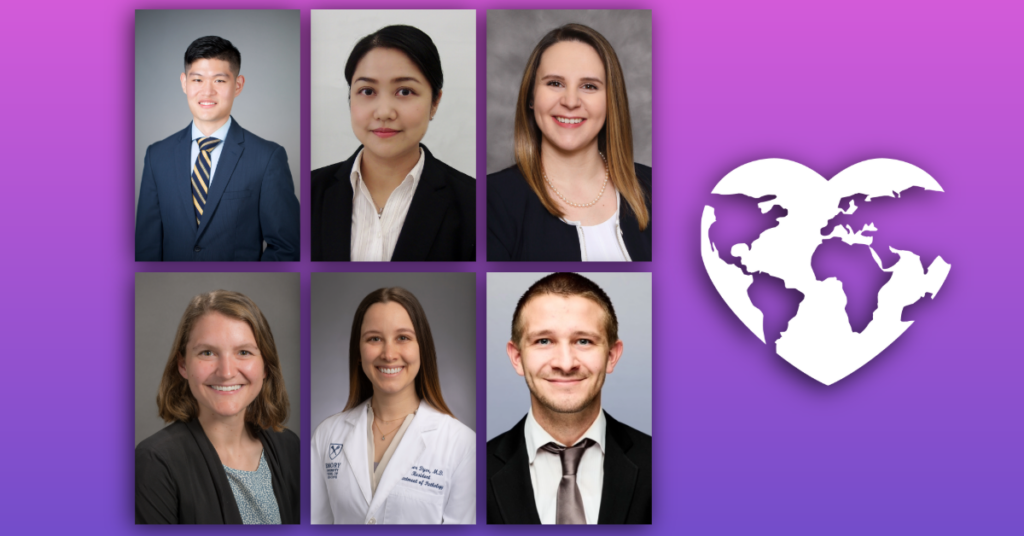
For six pathology residents, the CAP Foundation Informatics Travel Award provided the opportunity to do exactly that. Through donor support, Yuqing “Mike” Xiong, MD, Adam Krouse, MD, Katharine Crawford, MD, PhD, Lauren Miller, MD, JD, Eleanor Dyer, MD, and Fang Bian, MD, PhD attended the CAP Annual Meeting, where they gained knowledge, mentorship, and professional connections that are helping shape their futures as leaders in pathology informatics.
While each resident arrived with different experiences and career goals, they shared a common belief: pathology informatics has the power to improve patient care by transforming how information is collected, analyzed, and used within healthcare systems. The award gave them access to the tools, guidance, and community needed to turn that belief into action.
For Dr. Xiong, informatics represented an opportunity to bridge medicine and technology. Having witnessed how outdated laboratory information systems and fragmented workflows can delay diagnoses and create inefficiencies, he wanted to help design better systems for the future. Through educational sessions on artificial intelligence, laboratory information systems, and emerging technologies, he expanded his understanding of how pathologists can play a critical role in shaping healthcare technology. The experience reinforced his desire to contribute to computational pathology and AI-driven innovation.
Dr. Krouse entered the meeting eager to explore the growing role of healthcare data and digital pathology. What he found was a community of innovators who were already transforming pathology practice. Through networking opportunities, mentorship, and discussions with experts, he learned practical strategies for implementing digital pathology and gained valuable insight into future career opportunities. The experience helped him see not only where pathology is heading, but also how he could contribute to that future.
Dr. Crawford brought a strong background in bioinformatics and virology to her informatics journey. Already using data to improve laboratory medicine, she was drawn to the potential of informatics to improve workflows, reduce errors, and strengthen patient care. At the meeting, mentorship became one of the most valuable aspects of her experience. Conversations with experienced pathologists provided guidance on career planning, fellowship training, and leadership development. She returned home energized to share her knowledge with fellow trainees and help advance informatics education within her residency program.
Dr. Miller viewed informatics through the lens of quality improvement and laboratory operations. Having already worked on projects involving digital pathology, laboratory information systems, and workflow optimization, she sought opportunities to deepen her expertise and strengthen her leadership skills. At the CAP Annual Meeting, she attended informatics sessions and the Cancer Data Summit, where she gained practical insights into laboratory leadership, digital pathology, and data-driven improvements in patient care.
She also established mentoring relationships and professional connections that continue to influence her work and career development. Upon returning to her institution, she immediately began applying what she learned to quality improvement initiatives and educational activities, extending the impact of the award far beyond the conference itself.
For Dr. Dyer, informatics became a passion after she discovered how deeply technology influences modern laboratory medicine. While leading a project to digitize pathology slide collections within her residency program, she encountered real-world challenges involving data storage, software implementation, and digital pathology infrastructure. The Informatics Travel Award gave her the opportunity to learn directly from experts while strengthening her understanding of artificial intelligence, digital pathology, and healthcare data management.
She returned with new knowledge, new resources, and renewed confidence to continue advancing her digitization project while educating fellow residents on emerging topics such as AI ethics and HIPAA considerations.
Dr. Bian entered the meeting with extensive experience in bioinformatics, molecular pathology, and machine learning. She understood the tremendous potential of artificial intelligence and data analytics to improve diagnostic accuracy and precision medicine. Through the award, she deepened her understanding of emerging technologies while connecting with leaders in pathology informatics.
As a chief resident, she plans to multiply the impact of his experience by incorporating informatics concepts into resident education, mentoring junior trainees, collaborating on quality improvement initiatives, and sharing knowledge through presentations and conferences.
Although their paths differed, all six residents describe similar outcomes from their experience: greater confidence, stronger professional networks, meaningful mentorship, and a clearer vision for their future careers. The award allowed them to learn from leaders in the field, discover new possibilities, and gain practical knowledge they are already bringing back to their institutions.
What makes these stories especially meaningful is that the impact does not stop with the recipients. Each resident has returned to share what they learned with colleagues, students, faculty, and future trainees. They are applying new ideas to quality improvement projects, educational initiatives, laboratory operations, digital pathology programs, artificial intelligence efforts, and patient care activities. One award creates opportunities for one resident, but the benefits ripple outward to entire departments, institutions, and ultimately the patients they serve.
As healthcare becomes increasingly driven by data, digital technologies, and artificial intelligence, pathology needs leaders who can navigate both medicine and innovation. The CAP Foundation Informatics Travel Award helps develop those leaders at a critical stage in their training. Thanks to donor generosity, residents are gaining the skills, knowledge, and mentorship needed to become the next generation of pathology innovators.
For donors, this is the power of your investment. Your support does more than fund conference attendance. It helps launch careers, foster mentorship, inspire innovation, and prepare future pathology leaders who will improve patient care for years to come. Every award creates new opportunities. Every recipient expands the reach of that opportunity. And every gift helps ensure that more pathology residents can develop the expertise needed to shape the future of medicine.
Together, we are not simply supporting trainees. We are investing in the future of pathology.
More Stories

Why Donate
Every person deserves a diagnosis. Support care beyond the microscope. Expand access to pathology-locally and globally.